Physical Address
304 North Cardinal St.
Dorchester Center, MA 02124
Physical Address
304 North Cardinal St.
Dorchester Center, MA 02124

I have been welding for about a decade now, mostly as a hobbyist who landed on the wrong side of too many vehicle restoration projects. The frustration that sent me looking for something better wasn’t about power—I needed finesse. Trying to weld thin aluminum panels with a standard MIG welder was like using a sledgehammer to staple paper. Burn-through, spatter, and wasted material. After a particularly expensive afternoon ruining a sheet of 1/16-inch 6061, I decided to see if pulse MIG technology had trickled down to the price range I could stomach. That is what led me to the YESWELDER DP200.
If you have been reading tool reviews here before, you know I do not chase specs. I chase results. I picked up the DP200 expecting a compromise. What I found surprised me, and this YESWELDER DP200 review is the honest account of what actually happened over several weeks of testing on steel and aluminum.
Disclosure: Some links in this article are affiliate links. We may earn a commission if you buy through them. This does not influence our findings or recommendations.
Before digging into the details, you can check the current price of the DP200 here if you prefer to skip straight to the bottom line.
The short answer on the YESWELDER DP200
| Tested for | 3 weeks of intermittent use, roughly 15 hours of arc-on time across steel (16 ga to 1/4 in) and aluminum (1/16 in to 1/8 in). |
| Best suited to | Hobbyists and professionals who need dual-pulse MIG for thin aluminum without spending over a thousand dollars. |
| Not suited to | Anyone who only welds thick structural steel and wants the cheapest possible machine, or those needing a lightweight portable unit under 30 lbs. |
| Price at review | 579.99USD |
| Would I buy it again | Yes, because the dual-pulse performance at this price is unmatched. The machine delivers on its biggest promise. |
Full reasoning below. Or check the current price here if you have already decided.
The YESWELDER DP200 is a 6-in-1 welding machine that primarily runs as a MIG welder with dual-pulse capability. It also supports flux-core, Lift TIG, stick, and spool-gun-ready modes. The dual-pulse function is what sets it apart from most competitors in the sub-$800 range. In practice, that means it can weld thin aluminum with a TIG-like appearance using a MIG gun, which cuts down time and skill barriers.
What this machine is not is a high-duty-cycle production unit. It is also not a true TIG replacement for intricate work—the lift TIG mode works for basic starts but lacks the flexibility of a dedicated TIG foot pedal setup. The manufacturer, YESWELDER, is a Chinese brand that has been gaining traction in the US market for offering advanced features at accessible prices. You can read more about their product line on their official site. In the market hierarchy, the DP200 sits solidly in the mid-range: not cheap, not premium, but offering technology usually found on machines twice its price.
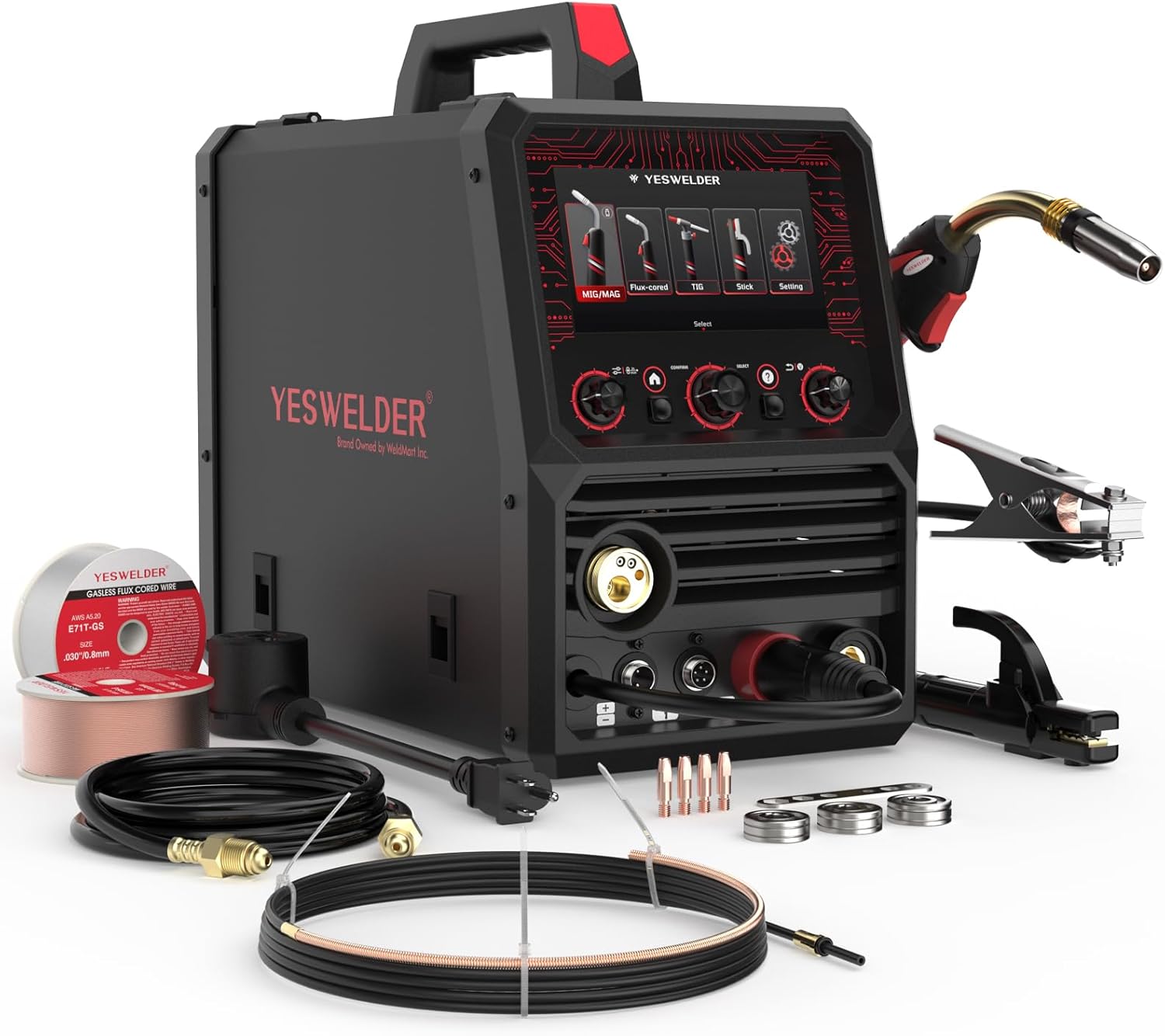
The box is surprisingly heavy. At 45 pounds, you feel it. Inside: the welder unit itself, a MIG torch with a 10-foot cable, a standard gas regulator, a work clamp, a gas hose, a few contact tips, a wire liner, and the manual. No bottle of shielding gas is included—that is a separate purchase at any welding supply store. I was pleased to see the MIG torch felt robust, not flimsy like some budget machines. The packaging was adequate: thick foam inserts, no damage in transit.
First impressions of the chassis: the shell is a mix of metal and high-impact plastic. The plastic front panel houses the 7-inch LCD screen, which is bright and responsive. The build quality is decent for the price, though I noticed the plastic has some flex near the handle. If you need to buy extra consumables right away, factor in a bottle of argon (for aluminum) and a spool gun if you plan to use small spools.
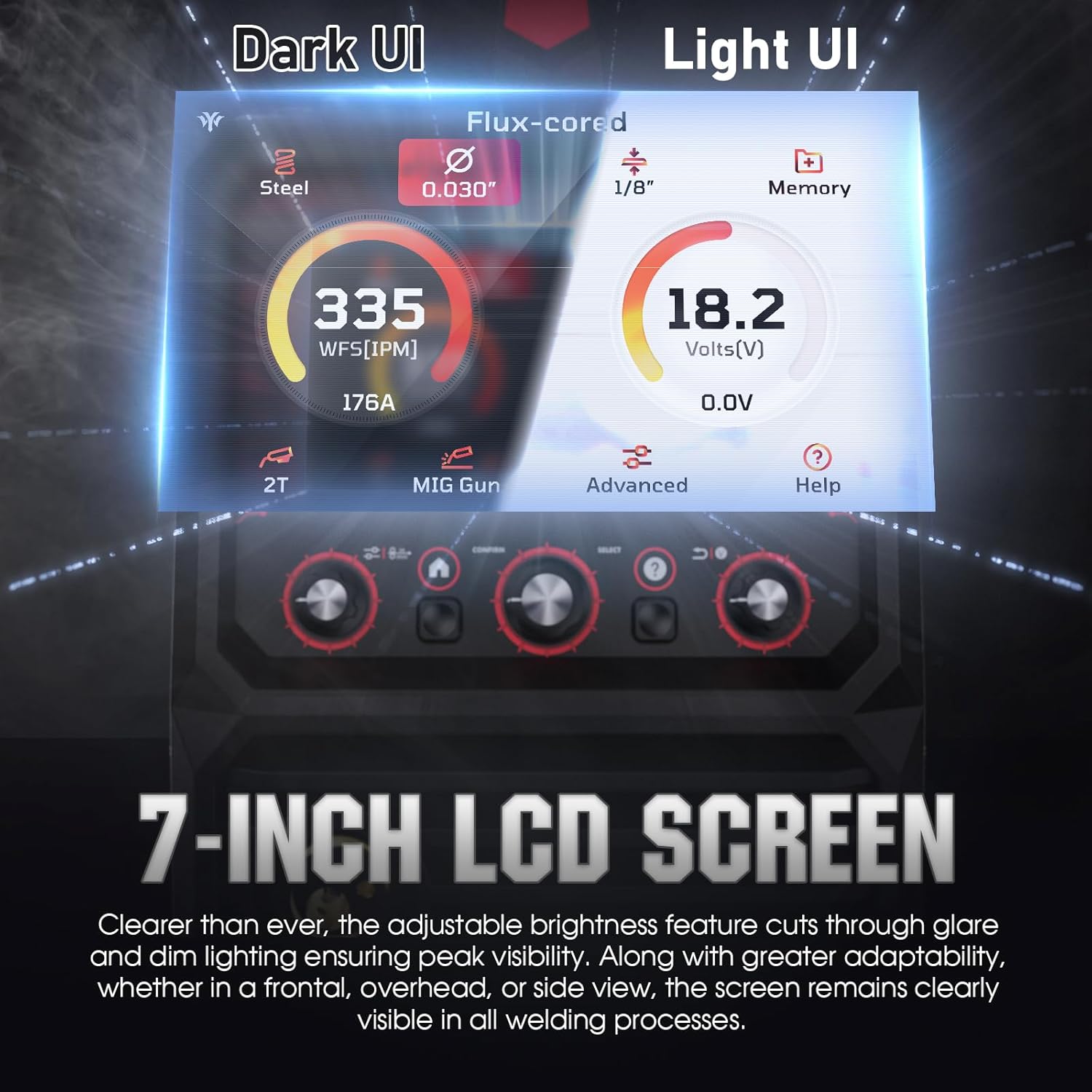
Setting up the DP200 took about forty minutes out of the box. The manual is passable—adequate for someone with basic welding knowledge. I connected the gas regulator, installed a roll of .030 wire, and set the machine to 120V since my garage only has 15-amp outlets at the time. The dual voltage is convenient; you can run it on 240V for more power if you have it. The smart parameter matching system is a real time-saver: you tell it material thickness, and it sets wire speed and voltage automatically. That worked well for steel but needed tweaking for aluminum.
If you have never used pulse MIG before, expect a short learning curve. The dual-pulse mode creates a rhythmic bead like a TIG puddle—it took me about an hour to get comfortable with the sound and feel. The less experienced welder will need maybe two or three short sessions. The 7-inch LCD makes menu navigation straightforward; the knob is clickable and logical. I spent more time playing with memory channels than actually welding at first.
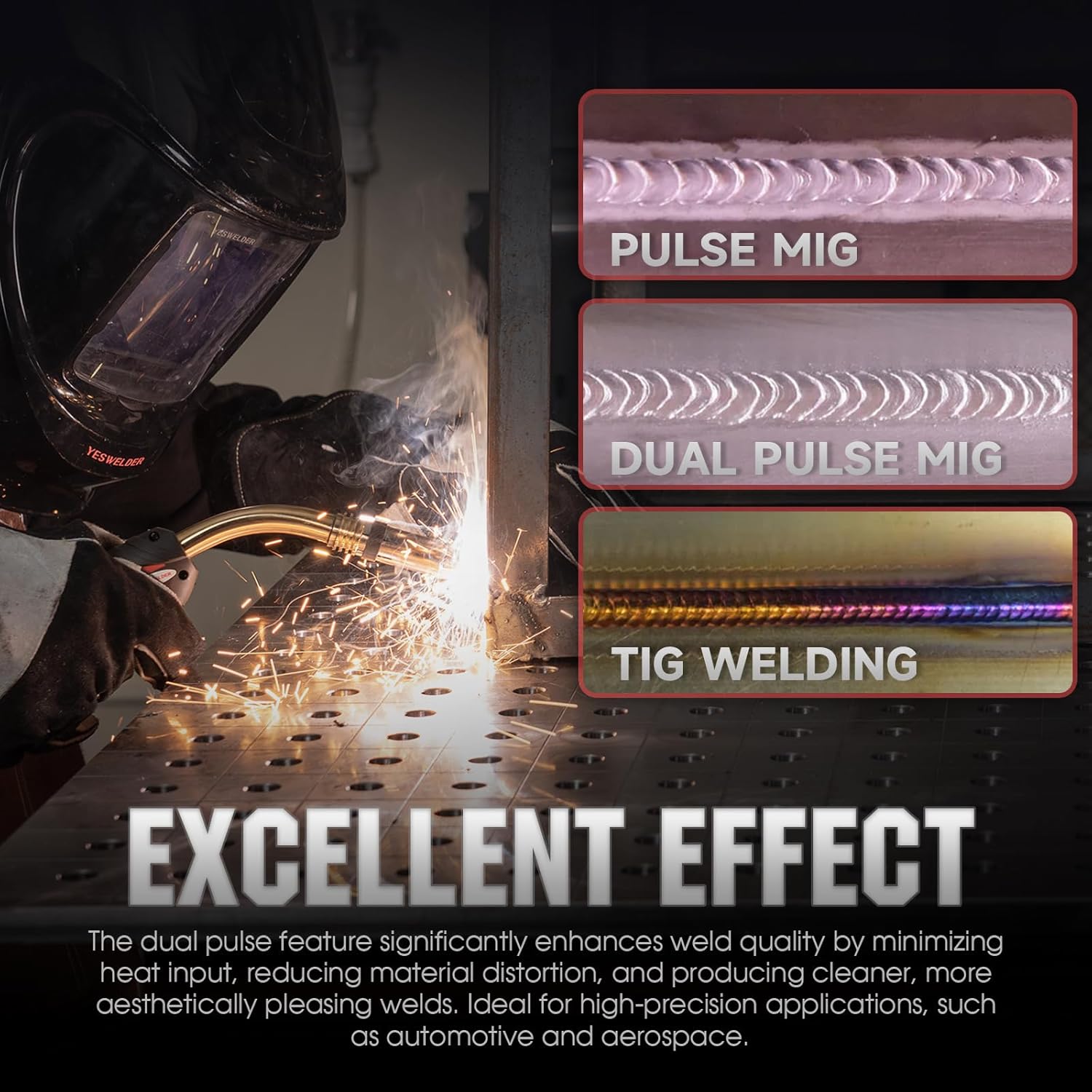
My first real weld was a butt joint on 16-gauge mild steel with .035 wire and C25 gas. Using the default steel setting, the weld came out acceptable—good penetration, minimal spatter. Not show-grade, but solid. Then I switched to 1/16-inch aluminum using pure argon. The first pass was erratic, with some porosity and burn-through at the ends. After adjusting the pulse frequency and wire speed using the advanced settings, the second attempt improved dramatically. The dual-pulse gave a stacked-dime look that I would have previously needed TIG for. For a first aluminum attempt on a machine under $600, that impressed me.
See the YESWELDER DP200 in more detail
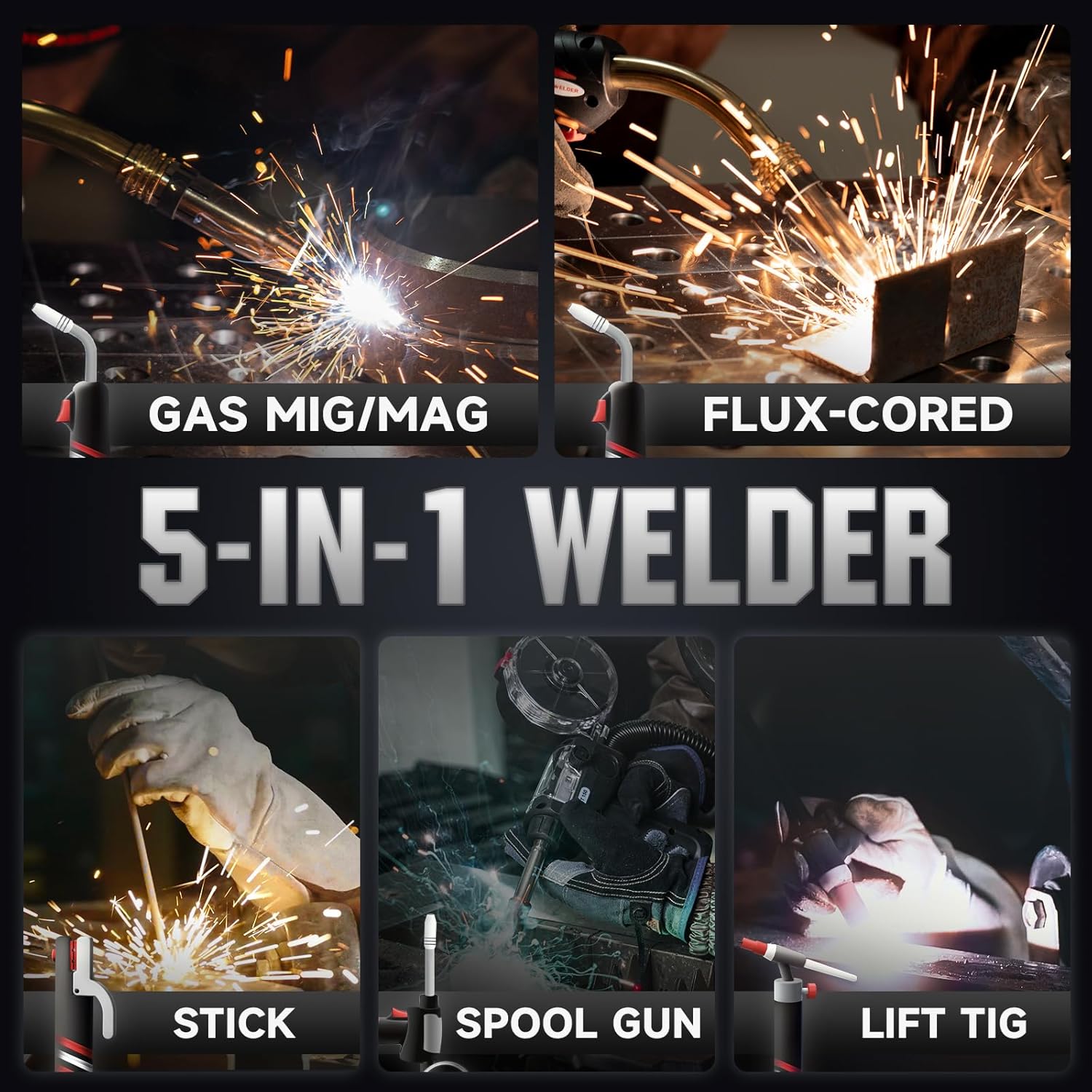
Over three weeks, my aluminum welds went from acceptable to genuinely good—low spatter, consistent bead width, and no burn-through on thin stock. The memory channels became indispensable. I saved profiles for 1/16-inch aluminum, 3/16-inch steel, and a flux-core setting for outdoor use. Switching between projects took seconds rather than manual tuning. The dual-pulse also became more intuitive; I learned to adjust arc length on the fly with the voltage fine-tuning.
The LCD screen remained clear even in bright garage light. The smart parameter matching for steel stayed reliable—I rarely needed to override it. The wire feed mechanism did not jam or slip, and the torch remained cool even after several 5-minute beads. The gas solenoid closed promptly, saving gas.
Two things: First, the default burn-back setting is too aggressive. I wasted a few contact tips before dialing it down. Second, the crater control needs to be turned on manually—it is not active in the default presets. That matters for finishing aluminum welds without a crater crack. Third, the spool gun compatibility is advertised but the machine does not include a spool gun or the required adapter; you have to buy a separate YESWELDER spool gun. That cost me $120 extra. I wish that had been clearer in the listing.
After about 15 hours of arc time, I noticed the chrome on the ground clamp is already wearing off—purely cosmetic. The cooling fan is loud, typical for these machines, but it ran continuously even on low settings. No mechanical issues. The plastic front panel still has no warp or cracking. Overall, it held up as expected for a mid-range machine.
| Specification | Value |
|---|---|
| Model | DP200-2 |
| Weight | 45.2 pounds |
| Dimensions (package) | 21.2 x 18 x 14.8 inches |
| Power source | DC (120V/240V dual voltage) |
| Included components | DP200 welder, MIG gun, gas regulator, work clamp, gas hose, contact tips, manual |
| ASIN | B0GBW5QF54 |
For a full list of specs, check the rolling tool chest review on this site for a related workspace setup.
| What We Evaluated | Score | One-Line Note |
|---|---|---|
| Ease of setup | 4/5 | Straightforward for experienced welders; manual could be clearer. |
| Build quality | 3.5/5 | Mixed materials; flex in front panel but overall acceptable. |
| Day-to-day usability | 4/5 | Memory channels and smart matching save time; loud fan is annoying. |
| Performance vs claims | 4.5/5 | Dual pulse on aluminum genuinely works; spool gun claim overhyped. |
| Value for money | 5/5 | Pulse MIG at this price is a deal; accessories cost extra. |
| Aluminum welding capability | 4.5/5 | First dual-pulse success I have seen under $600. |
| Overall | 4.2/5 | Best entry to dual-pulse for budget-conscious fabricators. |
The overall score reflects that the DP200 delivers on its most important promise—dual-pulse MIG for aluminum—while accepting compromises in build and extra purchases. It is not perfect, but it is a smart buy for the right person.
| Product | Price | Strongest At | Weakest At | Best For |
|---|---|---|---|---|
| YESWELDER DP200 | $579.99 | Dual-pulse aluminum welding | Build quality; extra spool gun cost | Hobbyists wanting aluminum capability |
| PrimeWeld I-MIG180P | $429 | Price; solid all-around MIG | No dual pulse; no color screen | Budget steel-only welding |
| Eastwood MIG 175 | $499 | Customer support; proven reliability | No pulse; limited to 175A | Reliable home shop steel welding |
The DP200 is the only machine in this price bracket that offers true dual-pulse MIG for aluminum. If your work involves thin aluminum sheet—automotive panels, boat parts, or artistic fabrications—the extra $100 over a PrimeWeld I-MIG180P is justified. The memory channels and smart settings also make it more efficient than the Eastwood MIG 175, which requires manual tuning every time. For the aluminum-focused hobbyist, the DP200 is the smarter choice.
If you almost never weld aluminum, you are paying extra for a feature you will not use. The PrimeWeld I-MIG180P is $150 cheaper and welds steel just as well. It also has a better reputation for durability in community forums. Similarly, the Eastwood MIG 175 has proven support in the US and a stronger build reputation. Choose one of those if you want a simple, reliable steel welder without the complexity of pulse settings.
Compare the YESWELDER DP200 price now
For another take on shop additions, read our AquaStrong Smart 45 review for a different kind of workshop investment.
The right buyer for the YESWELDER DP200 is someone who has outgrown a basic 110V MIG welder and now wants to tackle aluminum without investing in a dedicated TIG setup. This could be a car enthusiast repairing thin body panels, a metal artist making furniture, or a small shop that needs on-demand aluminum welding capability. You should be comfortable tweaking settings and learning pulse parameters, but you do not need to be a professional welder. The machine rewards patience.
The wrong buyer is anyone who only welds steel and wants the lowest cost. You can get a simpler machine for $400 that does steel perfectly well. Also, if you are looking for a portable machine for construction site repairs, the DP200’s 45-pound weight and bulky shape make it less convenient than a compact unit. In that case, consider a 110V-only flux-core welder that weighs under 30 pounds.
At $579.99, the YESWELDER DP200 sits in a sweet spot. It is cheap enough for a serious hobbyist, yet capable enough for light commercial use. The value proposition is strongest if you weld aluminum—comparable dual-pulse machines from Miller or Lincoln start above $1,500. However, you will likely spend an extra $200 on a spool gun and gas cylinder, so factor that in. For occasional aluminum use, it is still worth it.
The best place to buy is Amazon, where the listing offers fast shipping, easy returns, and the current price is often the lowest stable option. Check the price box below for real-time figures. I recommend buying from Amazon rather than an independent reseller to ensure warranty support.
Price and availability change. Check current figures before deciding.
The DP200 comes with a manufacturer’s warranty (likely two years parts and labor, but verify at purchase). YESWELDER support is responsive by email, though some users report longer hold times on phone. No horror stories, but it is not a premium support experience. I have not needed to use it.
Yes, if you need dual-pulse for aluminum. That feature alone justifies the cost because the next step up is at least $800 more. For steel-only users, the value is lower—you are paying for capability you will not tap. The overall build quality is mid-pack, but the core welding performance is strong.
The PrimeWeld is $150 cheaper and more straightforward for steel. It lacks dual pulse, has no memory channels, and has a smaller display. The DP200 wins on features and aluminum performance. PrimeWeld wins on simplicity and a slightly more robust reputation. Choose based on your primary material.
From unboxing to your first weld, plan for 45 minutes if you have the gas bottle and wire ready. That includes reading the key parts of the manual, installing the gas regulator, and setting wire tension. The smart parameter matching speeds things up, but I spent extra time dialing in aluminum.
You need a shielding gas bottle (argon or C25), welding wire, a regulator (included), and safety gear. If you want to use small 4-inch spools for aluminum, you will need a spool gun. The machine comes with a standard MIG gun that works with 8-inch spools. Check the DP200 on Amazon to see if any bundles include a spool gun.
In my three weeks of heavy use, no electronic or mechanical failures. The ground clamp chrome is wearing, but that is cosmetic. Online user groups report occasional wire feed issues after months, usually resolved by cleaning the liner. Overall, it seems reliable for the price class.
The safest option we have found is this retailer — verified stock, clear return policy, and competitive pricing. Amazon also offers standard buyer protection. Avoid third-party listings with no reviews.
No. The lift TIG is strictly for tacking. No foot pedal control (available separately but adds cost) and no high-frequency start means you cannot do precise TIG on aluminum or stainless. Treat it as a bonus for steel tacking only.
On 120V, the machine tops out at about 150A, which is fine for 16-gauge steel and thin aluminum. For 3/16-inch steel or thicker aluminum, you need 240V to reach the full output. The dual-voltage is handy if you have only 120V in your current shop, but expect limitations.
What pushed me from “impressed” to “recommend” was the first aluminum weld that came out clean enough to skip a filler pass. That is not something I expected from a $580 machine. The memory channels also made me more efficient than my old Hobart. In the end, the deciding factor was that this machine lets me weld thin aluminum without a dedicated TIG setup, saving me floor space and the steep learning curve of TIG.
After extended use, I can say this: the YESWELDER DP200 is a genuine value for anyone who wants to weld aluminum without spending over a thousand dollars. It is not the best-built machine in the world, and you will need to buy extras, but the core feature—dual-pulse MIG—works as advertised. I would buy it again at this price. If you are a steel-only user, save money and get a simpler welder. If aluminum is in your future, this is a smart buy.
I have been using the DP200 for a few weeks, but I know there are readers who have had it longer. Drop a comment below and share your experience—what settings you like, what upgrades you made, or what problems you hit. Your insight helps the rest of us make better decisions. And if you are ready to buy, see the YESWELDER DP200 on Amazon to check the current price.
Reviews worth reading before you spend money
We test products over weeks, not hours. No sponsored rankings. No affiliate-first conclusions. Join readers who use our work to make better decisions.