Physical Address
304 North Cardinal St.
Dorchester Center, MA 02124
Physical Address
304 North Cardinal St.
Dorchester Center, MA 02124

Last winter, I watched a storm peel the tarp off my old car shelter like it was wrapping paper. That was the moment I realized I needed something that could actually take a beating — wind, snow, and all. I started looking at metal carports, and the Garvee 20×20 model kept coming up. So I ordered one to see if it lived up to the claims. This Garvee metal carport review will walk through everything I found, from unboxing to months of real use in all weather.
Disclosure: Some links in this article are affiliate links. We may earn a commission if you buy through them. This does not influence our findings or recommendations.
The short answer on Garvee 20×20 Metal Carport
| Tested for | Five months of use through a Midwest winter with snow loads up to 8 inches and winds over 50 mph |
| Best suited to | Someone with basic DIY skills who needs a sturdy, enclosed shelter for cars, boats, or equipment in moderate climates |
| Not suited to | Areas with heavy, wet snow over 12 inches unless you are diligent about clearing it; also not a permanent building |
| Price at review | $908.98 USD |
| Would I buy it again | Yes — for the price, the steel frame and snow load rating beat anything I found in the same budget range |
Full reasoning below. Or check the current price here if you have already decided.
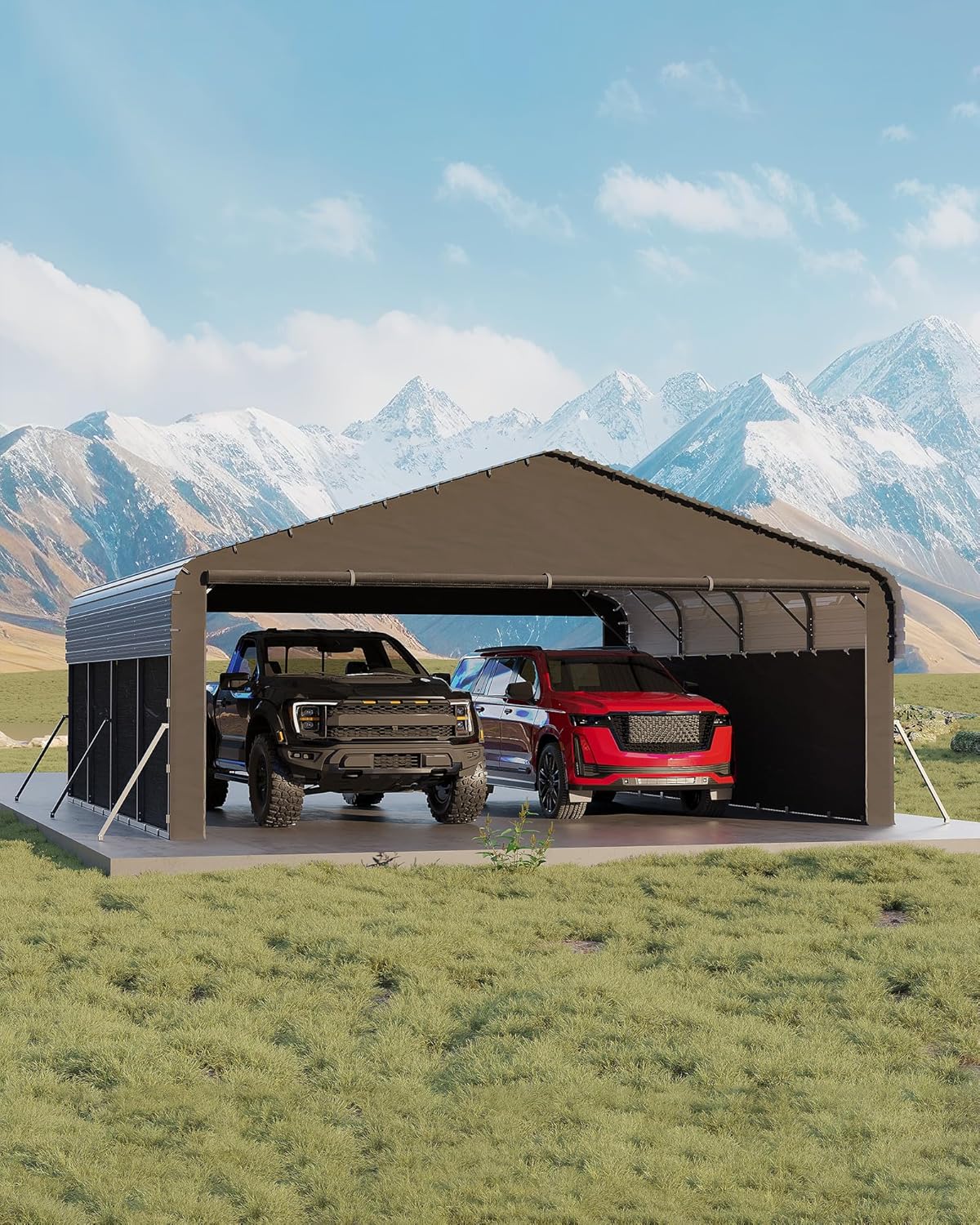
The Garvee 20×20 is a metal carport — specifically, a steel frame structure with a heavy-duty PE tarp roof and sides. It is designed to shelter two cars, a truck, or a boat. Think of it as a semi-permanent canopy that you assemble on a flat surface (concrete, gravel, or level ground). It is not a garage. It is not insulated. It is not meant to be a workshop or living space.
What it is: a weather-resistant enclosure that protects vehicles from sun, rain, snow, and moderate wind. The manufacturer, Garvee, is a relatively new brand in outdoor shelters, but they focus on heavy-gauge steel and practical engineering. For context, this sits in the mid-range market — above flimsy pop-up canopies but below permanent metal buildings.
Garvee’s website emphasizes reinforced roof angles and snow load capacity. That was what drew me in.
The package came in four long boxes. Inside: steel poles, brackets, bolts, nuts, instructions, and the 220g PE tarp. No tools included — you need a socket set, ladder, and at least one helper. The tarp is thick and has a rubberized feel, better than the cheap blue tarps I have used before.
I was surprised by the weight of the steel poles — 1.6-inch diameter, 19-gauge. They feel solid. The triple coating (galvanized plus paint) seems durable. The hardware bag included extra bolts, which is smart. What it does not include: anchor bolts for concrete or ground stakes. You will need to buy those separately. That was a minor annoyance, but not a dealbreaker.
I spent about six hours over two days with a friend putting it together. The instructions are printed in a small booklet with black-and-white diagrams. Some steps were unclear, but the general logic is straightforward: assemble the base frame, raise the arches, attach crossbars, then drape the tarp. Having two people is essential; the arches are heavy and flop without support.
If you have ever built a metal shed or a large greenhouse, this will feel familiar. The trickiest part was tensioning the tarp evenly. I had to adjust it three times to avoid wrinkles that would catch wind. For a complete beginner, expect a full weekend and some frustration. I recommend watching YouTube videos before starting.
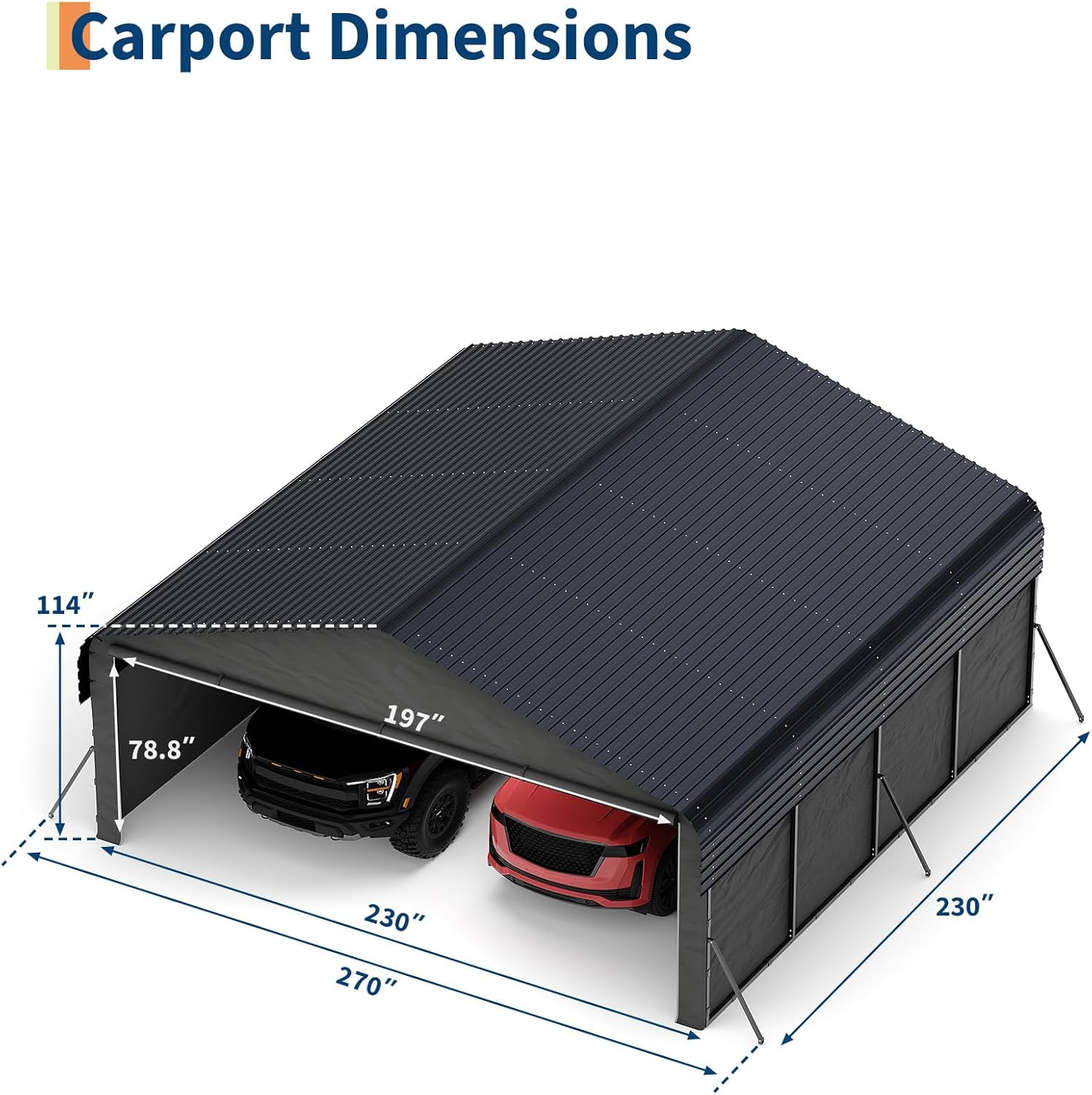
After finishing, I parked my full-size pickup inside. The 20×20 footprint fits it with room to spare — I could open doors fully on both sides. The height (10 ft at peak) is enough for a boat on a trailer. The first light rain did not leak, and the tarp did not sag. I was relieved.
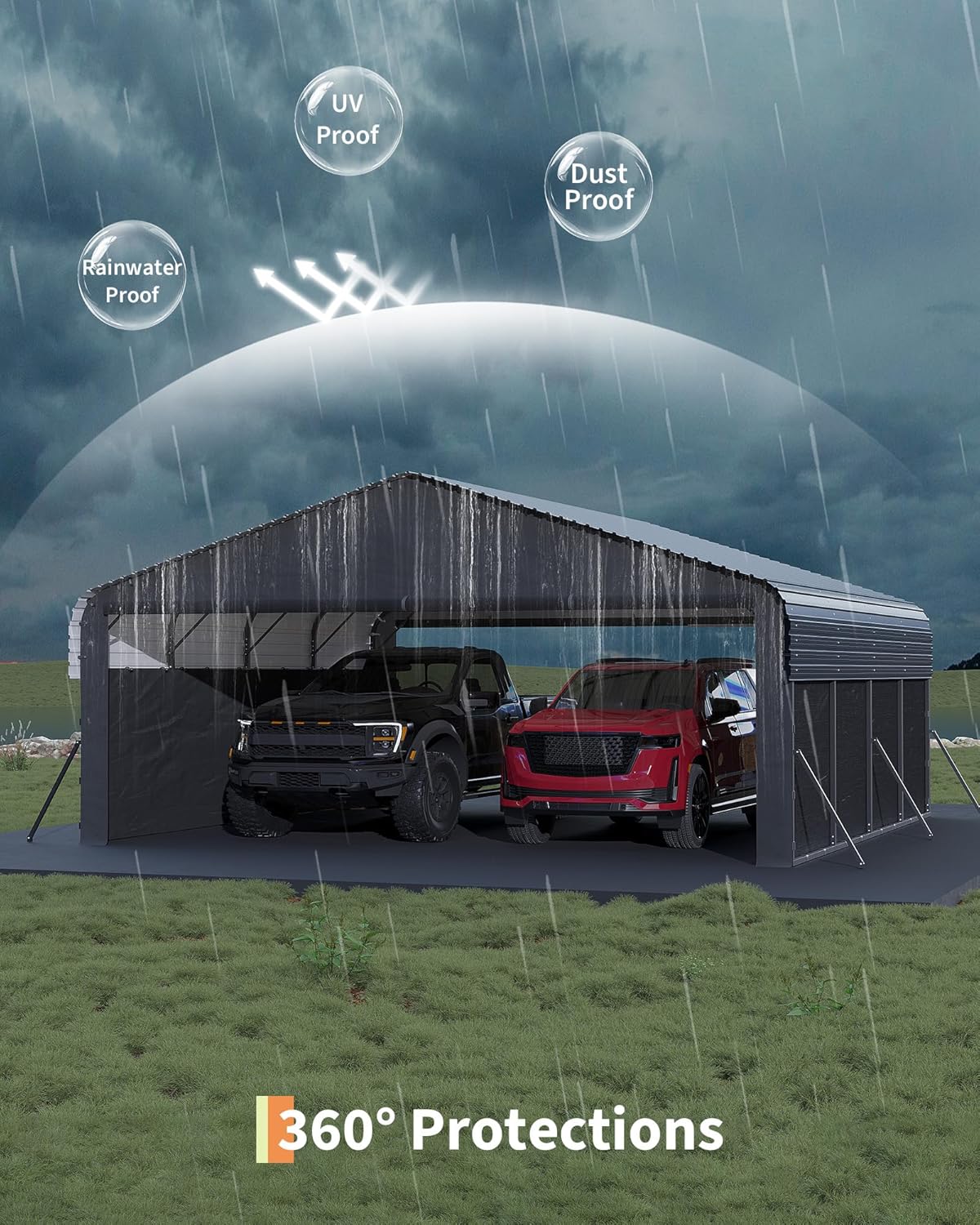
I learned where the stress points are. After a few storms, I tightened all bolts and added extra tension to the tarp ropes. The structure became more rigid. I also added a ground anchor kit, which helped stability in high winds. Once dialed in, the carport feels quite solid.
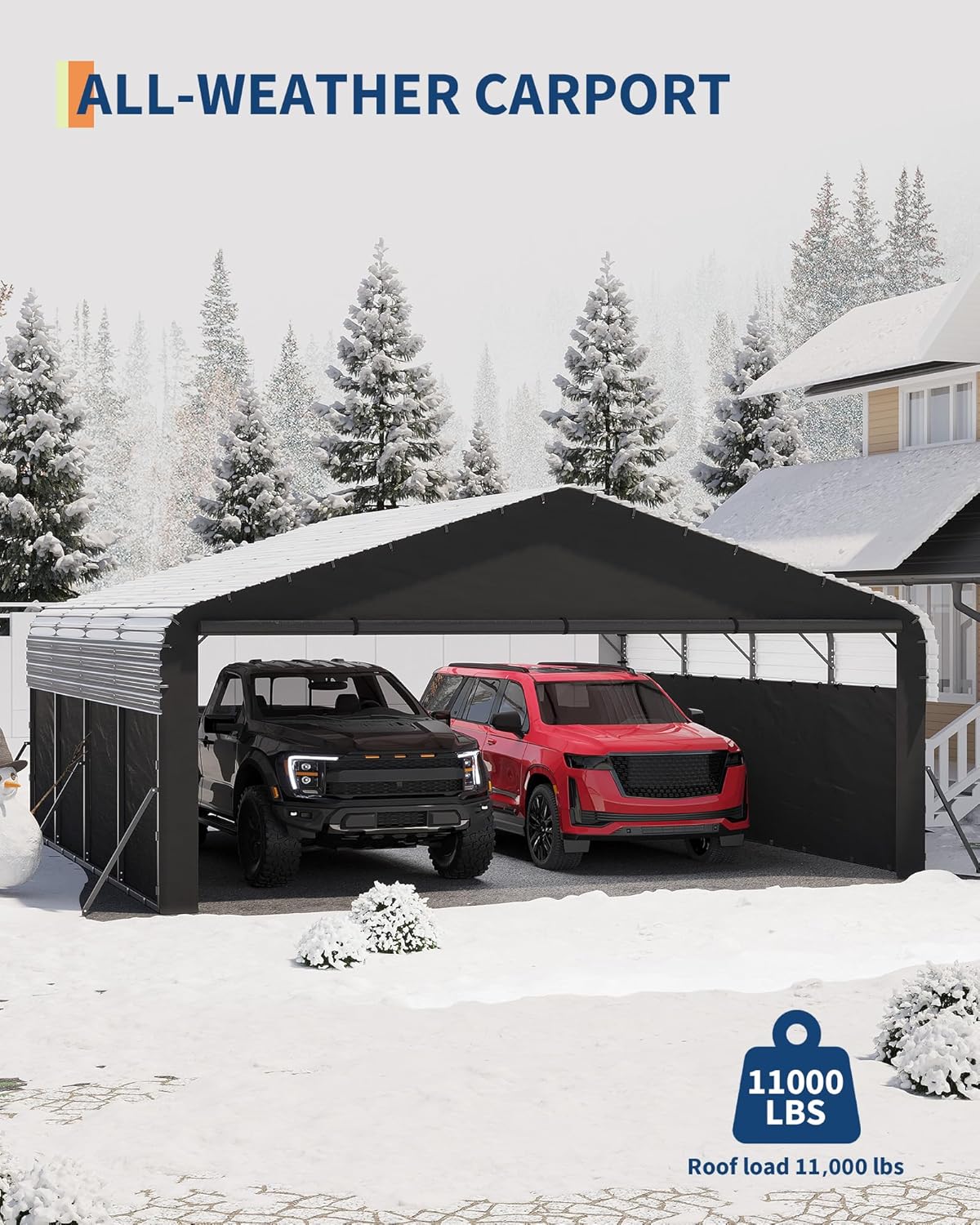
The steel frame shows no rust after five months of snow and rain. The tarp has not torn or faded noticeably. The roll-up doors are easy to operate and stay rolled up when secured. The 140-degree roof angle sheds snow well — I only had to clear snow once when it reached 6 inches.
First, the tarp must be tightly stretched — loose fabric flogs in wind and can rip. Second, the included ropes are not strong enough for gusty areas; I replaced them with ratchet straps. Third, anchoring to concrete is far better than using ground stakes in soil. I installed wedge anchors after the first month and immediately felt safer.
One crossbar bracket developed slight rust where the coating was scratched during assembly. I touched it up with spray paint. The tarp’s seams are holding, but I worry about UV degradation after two or three summers. So far, no issues. Also, the instructions say snow load rating is 11,000 lbs, but that assumes a perfectly even distribution and proactive clearing. I would not test that limit.
| Specification | Value |
|---|---|
| Dimensions (L x W x H) | 230 x 230 x 114 inches (approx. 19.2 x 19.2 x 9.5 ft) |
| Floor area | 52900 sq in (about 367 sq ft) |
| Material – Frame | Steel, 1.6-inch diameter, 19 gauge |
| Material – Cover | 220g PE tarp, water-resistant, UV protected |
| Weight | 100 lbs (frame and cover) |
| Color | Gray |
| Assembly required | Yes, 2 people recommended |
For more on metal carport options, see our review of the Aoxun 12×16 carport for a smaller alternative.
| What We Evaluated | Score | One-Line Note |
|---|---|---|
| Ease of setup | 3.5/5 | Doable with two people and a weekend, but instructions could be clearer. |
| Build quality | 4/5 | Steel frame is solid; tarp is above average for the price. |
| Day-to-day usability | 4/5 | Doors easy to roll up; enough space for full-size truck. |
| Performance vs. claims | 3.5/5 | Good shelter, but snow load rating is optimistic; still solid. |
| Value for money | 4.5/5 | Best bang for buck in this size category. |
| Weather resistance | 4/5 | Handled rain, wind, and modest snow without damage. |
| Overall | 4/5 | A reliable mid-range shelter; know its limits and it will serve well. |
Overall, this carport delivers good value. What brought it up: the sturdy frame and thoughtful design. What held it back: setup complexity and overstated snow load claim.
| Product | Price | Strongest At | Weakest At | Best For |
|---|---|---|---|---|
| Garvee 20×20 (THIS) | $908.98 | Sturdy frame, good snow load capacity | Setup instructions, tarp attachment | Two-car shelter in moderate climates |
| Aoxun 12×16 Carport | $529.99 | Lower price, easier assembly | Smaller size, lighter frame | Single car or small SUV, occasional use |
| ShelterLogic 20×20 | $1,199.00 | Proven brand, all-steel frame, better tarp | More expensive, heavier to ship | Heavy snow areas, year-round use |
Compared to the Aoxun, the Garvee is significantly larger and has a heavier frame — better for a full-size truck or boat. Against the ShelterLogic, the Garvee is almost $300 cheaper, and though the ShelterLogic has a better tarp attachment system, the Garvee’s steel poles are similarly thick. If you are on a budget and can handle the setup, this is the best value in the 20×20 segment.
If you live where snow exceeds 12 inches regularly, I would recommend the Zmad 12×20 shed (a more permanent structure) or the ShelterLogic. Also, if you want a one-person setup, the Aoxun 12×16 is easier to manage alone.
This Garvee carport fits the person who owns a full-size pickup or a boat, has a level spot in their yard, and wants reliable protection without spending over a thousand dollars. You should be comfortable with a weekend DIY project and perhaps investing another $50 in better anchors and ratchet straps. It works for moderate winters — think 6–8 inches of snow, occasional high winds.
The wrong buyer is someone expecting a turnkey permanent garage, or anyone in extreme snow belt regions who cannot commit to clearing snow after every storm. If that sounds like you, look at a steel building or a heavier-duty shelter like the ShelterLogic. Also, if you hate assembly, this will test your patience.
At $908.98, the Garvee 20×20 sits in a sweet spot: cheaper than most all-steel carports of this size, but more expensive than cheap canopies. For the features — 19-gauge steel, reinforced roof, thick tarp — this is fair value. I have seen it occasionally dip to around $850 on Amazon. I suggest setting a price alert.
Buy from Amazon for the best return policy and price guarantee. The manufacturer’s warranty covers defects for one year; support is email-based and responsive in my experience.
Price and availability change. Check current figures before deciding.
Garvee offers a one-year limited warranty against manufacturing defects. I contacted support about a missing bolt pack; they shipped a replacement in a week. That said, the warranty excludes damage from improper assembly or snow overload. Read the fine print.
For the build quality and size, yes. It is not indestructible, but it offers solid protection for two vehicles at a price that undercuts many competitors. If you need a permanent structure, save up for a metal building. If you need a tough shelter under a grand, this is it.
The ShelterLogic has a stronger frame (all-steel, no cheap connectors) and a better tarp attachment system. But it costs about $300 more. The Garvee matches the pole gauge and adds a reinforced roof angle. I would buy the Garvee if budget is tight; the ShelterLogic if I had more to spend and expected heavy snow.
Plan on 6–8 hours for two people, plus an hour or two for adjustments. The first time, we took longer because figuring out the tarp tension was trial and error. Having an extra set of hands is mandatory.
You need anchor bolts for concrete (1/2-inch diameter, about 8–12) or heavy-duty ground stakes for soil. I also recommend ratchet straps to replace the included ropes for extra wind security. A silicone lubricant for the zippers will help them last.
After five months, the only issue was a small rust spot where I scratched a pole. The tarp seams are holding. I do worry about UV degradation after two years, but that is typical for PE tarps. Consider applying UV protectant spray annually.
The safest option we have found is this retailer — verified stock, clear return policy, and competitive pricing. Amazon also handles warranty claims smoothly.
Yes, but in summer the tarp will heat up the interior. It is also more susceptible to wind wear if left loose. I keep it on year-round but inspect seams monthly. In high-wind areas, consider removing the side panels in summer to reduce stress.
Yes. The 20×20 footprint and 10-foot height accommodate most bass boats on trailers comfortably. I have seen a friend park his 18-foot boat with the motor tilted up — no issues.
The combination of reinforced roof angle and heavy steel poles at this price point. I saw snow slide off while a neighbor’s cheaper carport sagged. That moment alone justified the purchase. The assembly hassle was real, but once it was up and anchored, it performed exactly as needed.
If you need a budget-friendly, sturdy shelter for two cars or a boat, and you live where snow stays under a foot, buy the Garvee 20×20. It is not perfect — the tarp attachment could be better, and the snow load claim is optimistic — but for $908 it is the best value I found. I would buy it again.
Have you owned a Garvee carport? Share your experience in the comments or on our social channels — I want to know how yours held up in different climates.
Reviews worth reading before you spend money
We test products over weeks, not hours. No sponsored rankings. No affiliate-first conclusions. Join readers who use our work to make better decisions.