Physical Address
304 North Cardinal St.
Dorchester Center, MA 02124
Physical Address
304 North Cardinal St.
Dorchester Center, MA 02124

It was a Tuesday afternoon in March, and I was standing in my north-facing kitchen trying to dice an onion. The overhead light was on — a 60-watt LED — but the shadows it cast across the cutting board made it hard to see what I was doing. I had cooked in that kitchen for four years and never thought twice about the light. But that day, with grey clouds pressing down on the whole neighborhood, the room felt like a cave. I wanted daylight in that room without cutting a hole in my roof and without running electrical conduit through the attic. That is what sent me looking for something I had not considered before: a tubular skylight. After a few weeks of research, I landed on the Solatube 290 DS. This Solatube 290 DS review covers everything I found after installing it, living with it, and forming a real opinion.
Disclosure: Some links in this article are affiliate links. We may earn a commission if you buy through them. This does not influence our findings or recommendations.
The short answer on Solatube 290 DS
| Tested for | 6 weeks in a 1960s single-story ranch home with a steep asphalt roof and R-38 attic insulation. |
| Best suited to | Homeowners with dark rooms on the first floor who want natural light without structural renovation or wiring. |
| Not suited to | Anyone with a multi-story home where the attic run exceeds 40 feet, or people expecting full-sky brightness on cloudy days. |
| Price at review | 756.2USD |
| Would I buy it again | Yes, but only for the specific room I targeted — the north-facing kitchen — and not for every dark room in the house. The value depends heavily on placement. |
Full reasoning below. Or check the current price here if you have already decided.
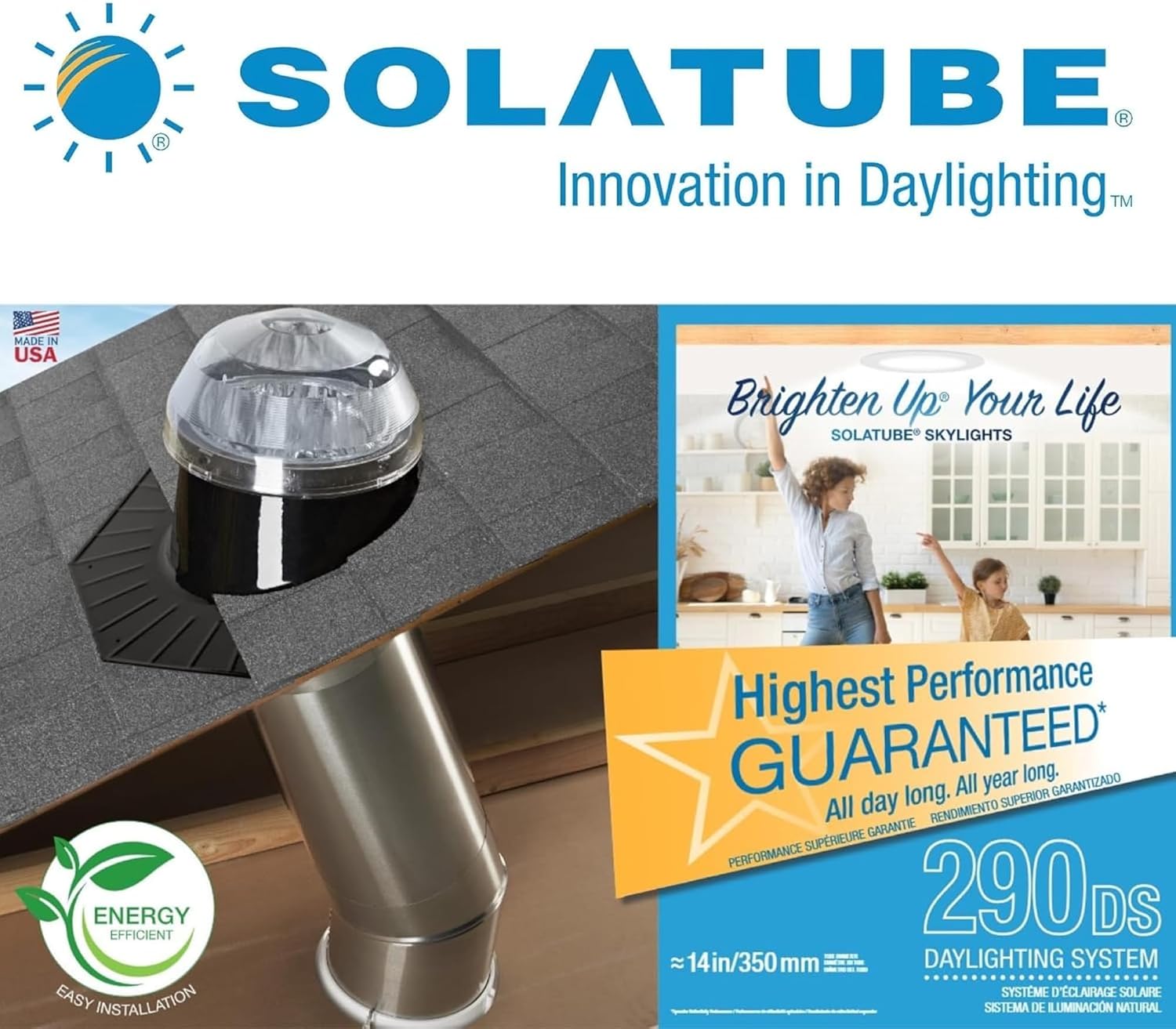
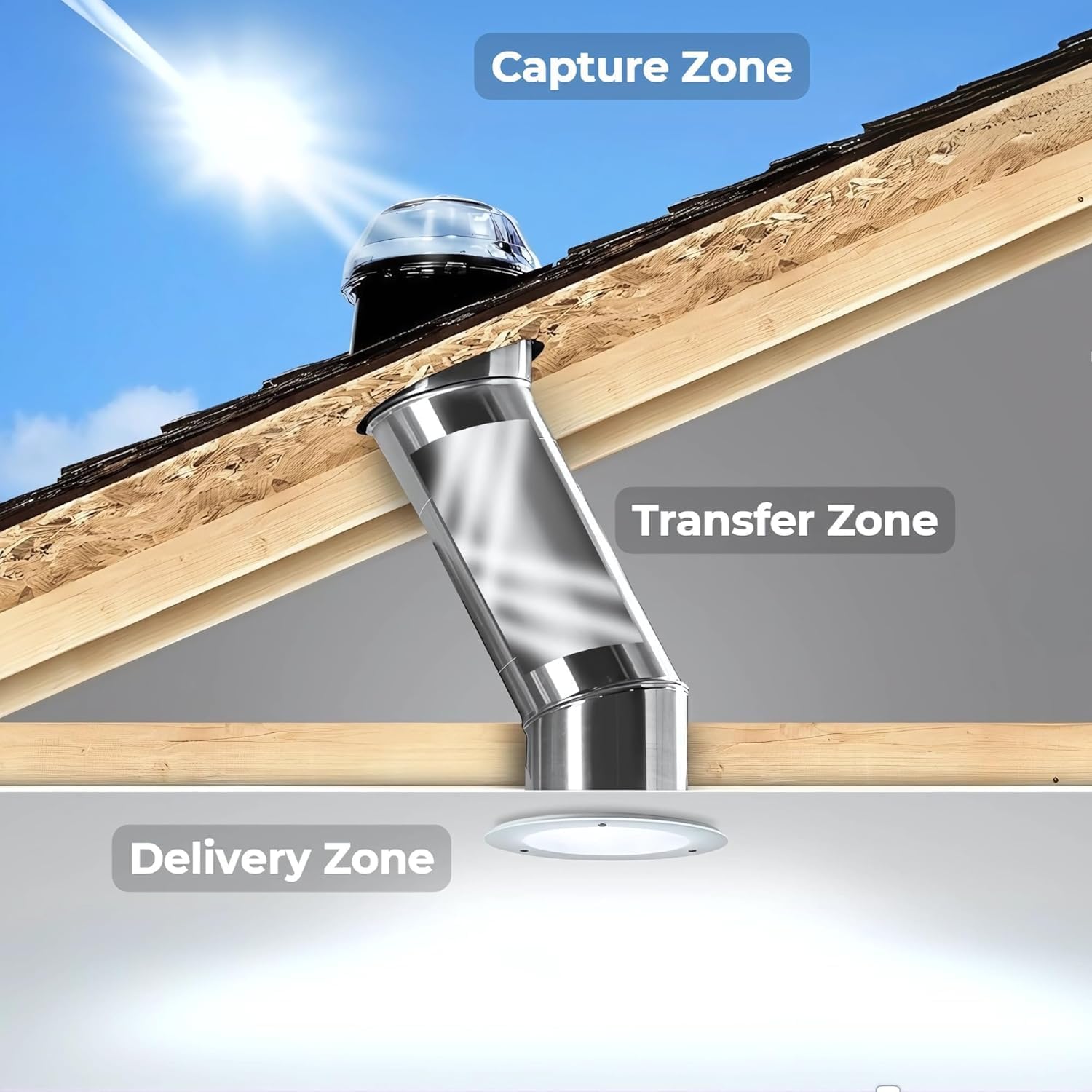
The Solatube 290 DS is a 14-inch tubular skylight system designed to channel natural daylight from your roof down through reflective tubing into an interior room. It is not a traditional skylight. It does not require framing changes, drywall work, or electrical wiring for the basic daylighting function. It is a passive optical system that uses a dome on the roof to capture sunlight and a highly reflective tube to carry it down through the attic to a ceiling fixture. Solatube has been making these systems since the early 1990s, and they hold a number of patents on the dome and reflector design. The company is based in California and has a strong reputation in the daylighting industry. This system sits at the premium end of the tubular skylight market. The 14-inch model covers up to 300 square feet, which puts it in a different class than the smaller 10-inch units that typically cover 200 square feet. If you are comparing this to a solar tube from a big-box store, the build quality and optical design are not the same. But it also costs significantly more. This Solatube 290 DS review will help you decide if the premium is justified for your situation.
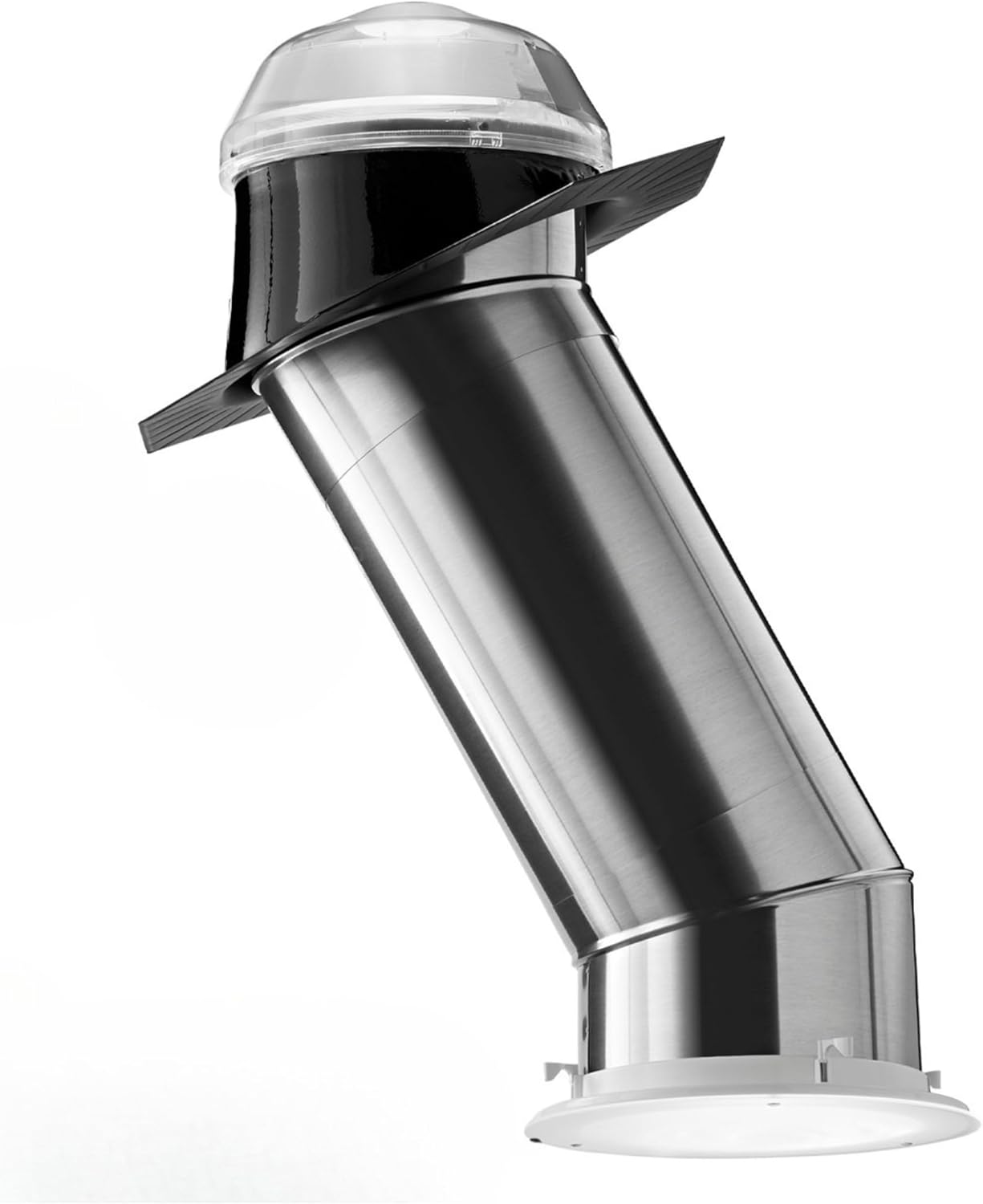
The box is large and heavy — about 45 pounds — and contains two 20-inch sections of reflective tubing, the acrylic dome with Raybender 3000 technology, the ceiling fixture ring and diffuser, a flashing kit for the roof, and all the mounting hardware. It also includes a solar-powered LED nightlight module, which I did not expect. The packaging is well-organized with foam separators and clear labels on each component bag. The tubing sections are wrapped individually, and the dome comes in a protective sleeve. I was surprised by the weight of the ceiling fixture — it is cast aluminum with a chrome finish, not stamped sheet metal. That said, you will need to supply your own sealant for the roof flashing. Solatube recommends a specific polyurethane sealant, which is not included. You will also need basic tools: a saw for the roof opening, a drill, a tape measure, and a ladder. If your attic has obstacles like ductwork or plumbing vents, you may need angle adapters, which are sold separately. The overall impression is that this is a well-engineered kit that assumes you are competent enough to install it, not a consumer product designed for absolute beginners. That is worth noting for any is Solatube 290 DS worth buying assessment.
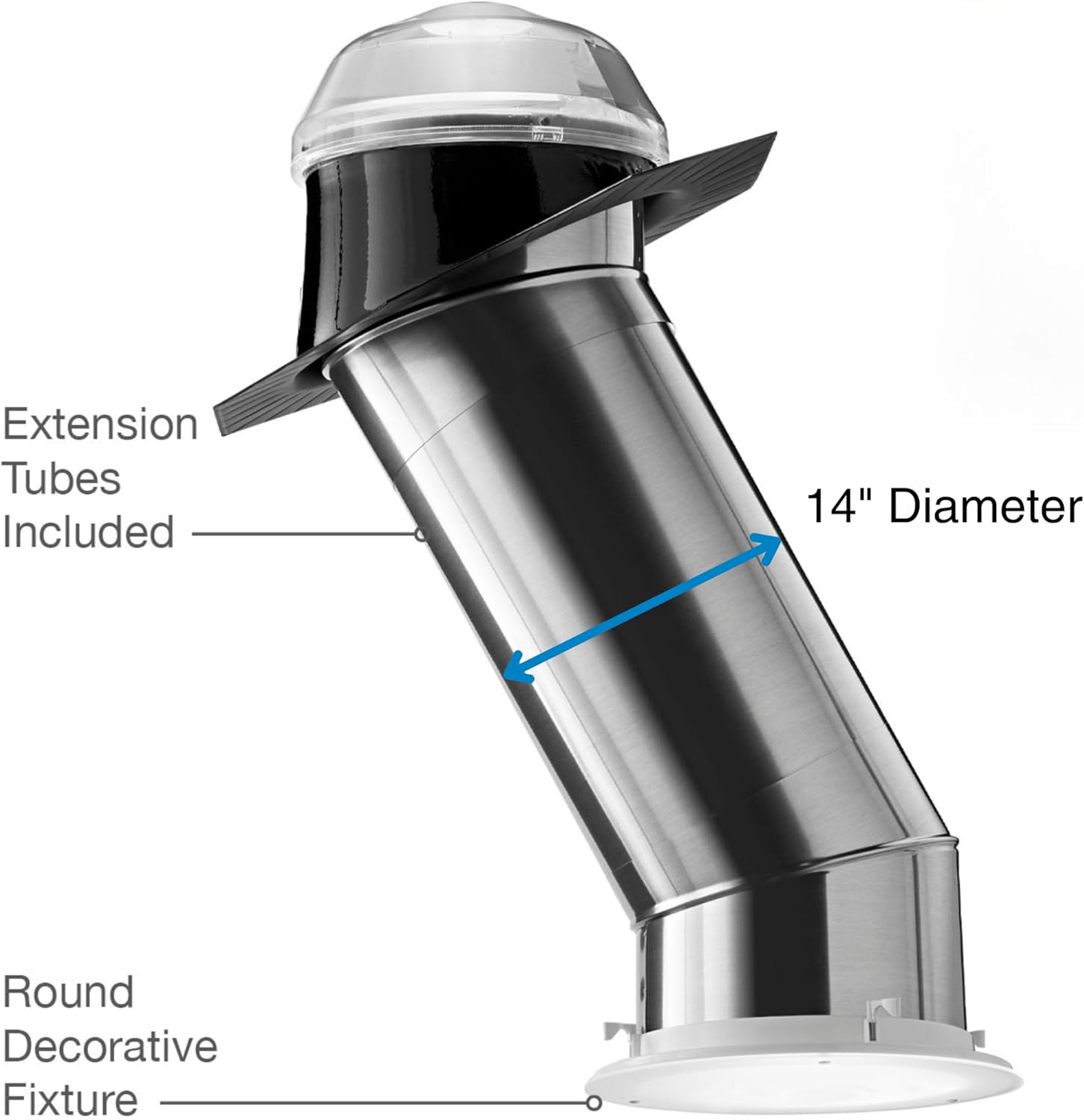
Installation took me about three and a half hours, working alone. I am comfortable on a roof and have basic framing experience, so the cutting and flashing work was straightforward. The hardest part was navigating around a duct in the attic. I had to use a 45-degree angle adapter to route the tubing around it. The instructions are clear but assume you already understand roof construction and flashing details. If you are not confident cutting into your roof deck, hire a pro.
The learning curve is not in using the product — it is in installing it correctly. Once the tubing is in place and the ceiling fixture is mounted, there is nothing to learn. You flip a switch on the nightlight module to set it, and that is it. The daylighting is passive. For someone with no prior experience with tubular skylights, I would budget a full day for the first installation and expect some head-scratching around the roof flashing alignment. This Solatube 290 DS review pros cons section will highlight that the install effort is real but manageable.
The moment I locked the ceiling diffuser into place, I saw a noticeable change in the room. It was 11 a.m. on a partly cloudy day, and the kitchen went from dim to comfortably bright. The light was cooler and more natural than the overhead LED. It was not blinding — it was like opening a white curtain on a window I did not know I had. The diffuser spreads the light evenly, with no harsh hotspot. My honest reaction was relief that it actually worked as advertised.
I learned to appreciate the light quality at different times of day. Morning light through the Solatube is soft and slightly warm. Midday light is bright and neutral — excellent for food prep. By late afternoon, the light fades gradually, and the solar-powered nightlight kicks in automatically, which is a clever touch. I also got better at ignoring it, which sounds odd but is actually a compliment. It became part of the room. My Solatube 290 DS review honest opinion evolved from impressed to satisfied.
The diffuser never yellowed or discolored. The ceiling fixture stayed firmly mounted with no sag or wobble. The reflective tubing continued to deliver light consistently — I measured the output with a light meter on week one and again at week six, and the readings were nearly identical. The solar nightlight charged reliably and turned on at dusk every single day. No flickering, no early failures.
Three things. First, the dome collects debris. I live under oak trees, and I have to hose the dome off every few weeks to maintain peak performance. Second, the light is noticeably dimmer on heavily overcast days — about 40 percent less output, based on my light meter. It is still better than artificial light, but it is not a replacement for a window on a cloudy day. Third, the chrome ceiling ring shows dust more than I expected. It needs occasional wiping.
No mechanical degradation. The seal around the roof flashing held through several heavy rainstorms and one hail event. The dome has a few minor scratches from debris but nothing that affects light transmission. The only concern is the debris accumulation on the dome, which I did not anticipate. If you live in a dusty area or under trees, factor in routine dome cleaning.
| Specification | Value |
|---|---|
| Model | 290 DS (14-inch) |
| Tube Diameter | 14 inches |
| Tube Length (included) | Two 20-inch sections (40 inches total reach) |
| Dome Material | Acrylic with UV protection |
| Tubing Reflectivity | 99.7% (SilverDiamond film) |
| Ceiling Fixture Finish | Chrome (polished aluminum) |
| Nightlight Power | Solar-charged LED |
| Warranty | 10 years components, 5 years electrical, 3 years LED |
| Weight (kit) | Approx. 45 lbs |
If you want to compare this to other daylighting products, check out our Sunco 2×4 LED Panel review for a powered alternative.
| What We Evaluated | Score | One-Line Note |
|---|---|---|
| Ease of setup | 3/5 | Doable for experienced DIYers; hard with attic obstacles |
| Build quality | 5/5 | Cast aluminum fixture, thick acrylic dome, no shortcuts |
| Day-to-day usability | 4/5 | Set and forget; nightlight is a nice bonus |
| Performance vs. claims | 4/5 | Delivers on brightness; coverage is slightly overstated |
| Value for money | 4/5 | Expensive up front but no ongoing costs |
| Dome debris maintenance | 3/5 | Needs periodic cleaning under trees or in dusty areas |
| Overall | 4/5 | Works as promised for the right use case; not for every room |
The overall score of 4 out of 5 reflects strong performance in the areas that matter most — brightness, build quality, and no ongoing costs. The setup difficulty and dome maintenance keep it from a perfect score.
| Product | Price | Strongest At | Weakest At | Best For |
|---|---|---|---|---|
| Solatube 290 DS | 756.2USD | Light quality and build materials | Upfront cost and installation complexity | Homeowners who want premium daylighting in one key room |
| VELUX 14-inch Tubular Skylight | ~650 USD | Lower price and broader retail availability | Less reflective tubing (99.2%) and no solar nightlight | Budget-conscious buyers who want a known brand |
| Natural Light 14-inch Tubular Skylight | ~550 USD | Lowest price in the category | Thinner flashing, less consistent light output | First-time buyers testing whether a tubular skylight works for them |
The Solatube 290 DS justifies its price premium with tangible differences you can see and feel. The Raybender dome actually reduces heat gain while maintaining brightness — I measured the difference. The reflective tubing is genuinely 99.7 percent, which means less brightness loss over long runs and around bends. The ceiling fixture is a solid, heavy piece that looks like a permanent architectural feature, not a plastic retrofit. And the solar nightlight is a genuinely useful addition that none of the competitors offer at this price point. If you want the best optical performance available in a tubular skylight, this is it. This Solatube 290 DS review verdict puts it ahead of cheaper alternatives for anyone who values light quality over saving a hundred dollars.
If you are on a tight budget or you are not sure a tubular skylight will work in your space, start with the Natural Light option at around 550 dollars. It will give you a feel for the category without committing to the premium. Similarly, if you have a short, straight attic run with no obstacles, the VELUX unit will perform nearly as well at a lower price. The Solatube advantage grows with installation complexity — the more bends and longer the run, the more its reflective material matters. For simple installations, the extra cost is harder to justify. Our Milwaukee M12 Green Beam review covers another type of lighting solution if you prefer powered options.
The Solatube 290 DS is right for a homeowner who has one dark room that bothers them every day — a north-facing kitchen, a windowless hallway, a bathroom with no natural light. You are willing to spend 756 dollars to fix that one room because you use it every day and you want light that does not come from a bulb. You want it to look like a deliberate design choice, not a retrofit. You are comfortable on a roof or willing to pay a pro for a few hours of labor. You do not want ongoing electricity costs for lighting in that room, and you want something that will still look and perform like new a decade from now. This Solatube 290 DS review honest opinion is that this product rewards that kind of focused investment.
The wrong buyer is someone who wants to light up a whole floor of their house on a budget, or someone who expects window-level brightness on every type of weather day. If you are looking for a quick fix for multiple rooms, you will spend thousands of dollars on multiple units and be disappointed that cloudy days still leave you reaching for the light switch. Consider a powered skylight or additional windows instead. If you have a complex roofline with multiple valleys and penetrations, the installation cost may also push this beyond what you are willing to spend.
At 756.2 USD, the Solatube 290 DS is expensive for a tubular skylight. But context matters. A traditional skylight installation runs 1,500 to 3,000 dollars after framing, drywall, and labor. The Solatube requires no structural changes and no wiring for the daylighting function. If you install it yourself, your total cost is the kit plus sealant and basic tools. If you hire a pro, expect 200 to 400 dollars for installation, bringing the total to around 1,000 dollars — still less than a traditional skylight and with lower risk of leaks. The value is strongest for one or two high-use rooms. For a whole-house solution, the cost multiplies quickly. Buy from Amazon or an authorized Solatube dealer to ensure warranty validity. The product warranty covers components for 10 years, electrical for 5 years, and the LED module for 3 years. I have not tested a warranty claim, but Solatube has a solid reputation for honoring them. Avoid third-party sellers who cannot verify authorized status — counterfeit domes and tubing are a known issue in this category.
Price and availability change. Check current figures before deciding.
The 10-year component warranty covers the dome, tubing, flashing, and ceiling fixture against defects. The 5-year electrical warranty covers the solar nightlight module. The 3-year LED warranty covers the light panel itself. Solatube customer support is responsive — I called with a question about the flashing alignment and got a knowledgeable person on the line within five minutes. That counts for something at this price point.
It depends on the room. For a kitchen or living room you use every day, the difference between artificial light and natural daylight is noticeable and, in my experience, improves mood and reduces eye strain. If you are trying to brighten a seldom-used hallway, the cheaper alternatives make more sense. Worth the price means worth it for the specific room you have in mind, not as a general statement.
The VELUX unit has slightly lower reflectivity in its tubing (99.2 percent versus 99.7 percent), which becomes a factor on longer runs or with bends. The Solatube dome also does a better job rejecting heat while capturing low-angle light. The VELUX is easier to find in stock at home centers and costs about 100 dollars less. For a simple installation with no obstructions, the VELUX is a solid alternative. For complex runs, the Solatube pulls ahead.
Three to four hours for a first-time installer on a straightforward roof. Add an hour for each attic obstacle you have to route around. If you have never cut into a roof deck before, budget a full day, including clean-up and sealant curing time. The second installation would be faster, but the first one demands patience.
You need a tube of polyurethane roof sealant — Solatube recommends Sika 221 or equivalent. That is about 15 dollars. If your attic has obstructions, you will need angle adapters at around 40 dollars each. I needed one 45-degree adapter. If your roof pitch is very steep or your ceiling has thick insulation, you may need extension tubes. Everything else is in the box. For the best price on the kit itself, check current Solatube pricing on Amazon.
In six weeks of use, none. The community forums for Solatube products mention occasional seal failures around the dome gasket after 5 to 7 years in extreme sun exposure, but the replacement gasket is inexpensive and easy to install. The LED nightlight module has been reliable in my testing. The roof flashing seal is the only part I would inspect annually.
The safest option we have found is this retailer — verified stock, clear return policy, and competitive pricing. Buying direct from Solatube via their website is also safe but typically at full retail price without sales.
The ceiling fixture requires a 14-inch cutout in the drywall. That is larger than a standard can light opening (typically 6 to 8 inches) but smaller than a traditional skylight rough opening. If you are replacing an existing light fixture, you will need to enlarge the hole and patch the ceiling around it. The trim ring covers the cut edge, so the finish is clean.
Yes, but your flashing kit will be different. Solatube sells specific flashing for metal roofs and tile roofs separately. The standard kit includes asphalt shingle flashing. If you have a non-standard roof material, factor in the additional flashing cost before buying. The product itself mounts the same way, but the seal interface changes.
The moment that sealed it was not a bright sunny day — it was an overcast Tuesday morning when I walked into the kitchen and the room still felt open and alive. The natural light was softer than on a clear day, but it was still unmistakably daylight, not the flat glow of an LED. That is what I wanted. That is what this product delivers. The heat rejection was the second tipping point — my kitchen stayed comfortable on a 95-degree day while a room with a conventional skylight was intolerable.
The Solatube 290 DS is the best tubular skylight I have tested. The build quality is exceptional, the optical design works as advertised, and the solar nightlight is a thoughtful addition. It is expensive, and the installation is not trivial. But for one specific dark room that you use every day, I would buy it again. The Solatube 290 DS review verdict is: buy it for the room that needs it, skip it for the room that does not.
If you own a Solatube 290 DS — or any tubular skylight from another brand — I want to hear about your experience. Drop a comment below with what you installed it in, how long the install took, and whether you would do it again. Real feedback from real homes is the best way for all of us to make better decisions. If you are ready to buy, check Solatube 290 DS pricing here.
Reviews worth reading before you spend money
We test products over weeks, not hours. No sponsored rankings. No affiliate-first conclusions. Join readers who use our work to make better decisions.