Physical Address
304 North Cardinal St.
Dorchester Center, MA 02124
Physical Address
304 North Cardinal St.
Dorchester Center, MA 02124

You are tired of parking your boat, tractor, or second vehicle in the open, watching the sun fade the paint and rain rust the metal. A garage is too expensive, a shed too small. You have scrolled through a dozen carports online, and every listing promises “heavy duty” and “waterproof” — but you have learned that most of those claims are just words on a page. This is where the KEIKI carport review comes in. We spent two months installing and living with the 12×23 FT model to find out whether it actually holds up or if it is just another weekend project that ends up sagging after the first storm. This article reports what we found — not what the marketing materials say. If you are considering this shelter, you need the real story before you spend any money.
Disclosure: This review contains affiliate links. Purchasing through them supports our work at no added cost to you. All testing was conducted independently.
For context, we have previously reviewed several carports and outdoor shelters, including the Flouree 20×20 Carport, which revealed a different approach to assembly and durability. The KEIKI carport review picks up where that left off, focusing on the all-metal, sliding-door design that this brand highlights.
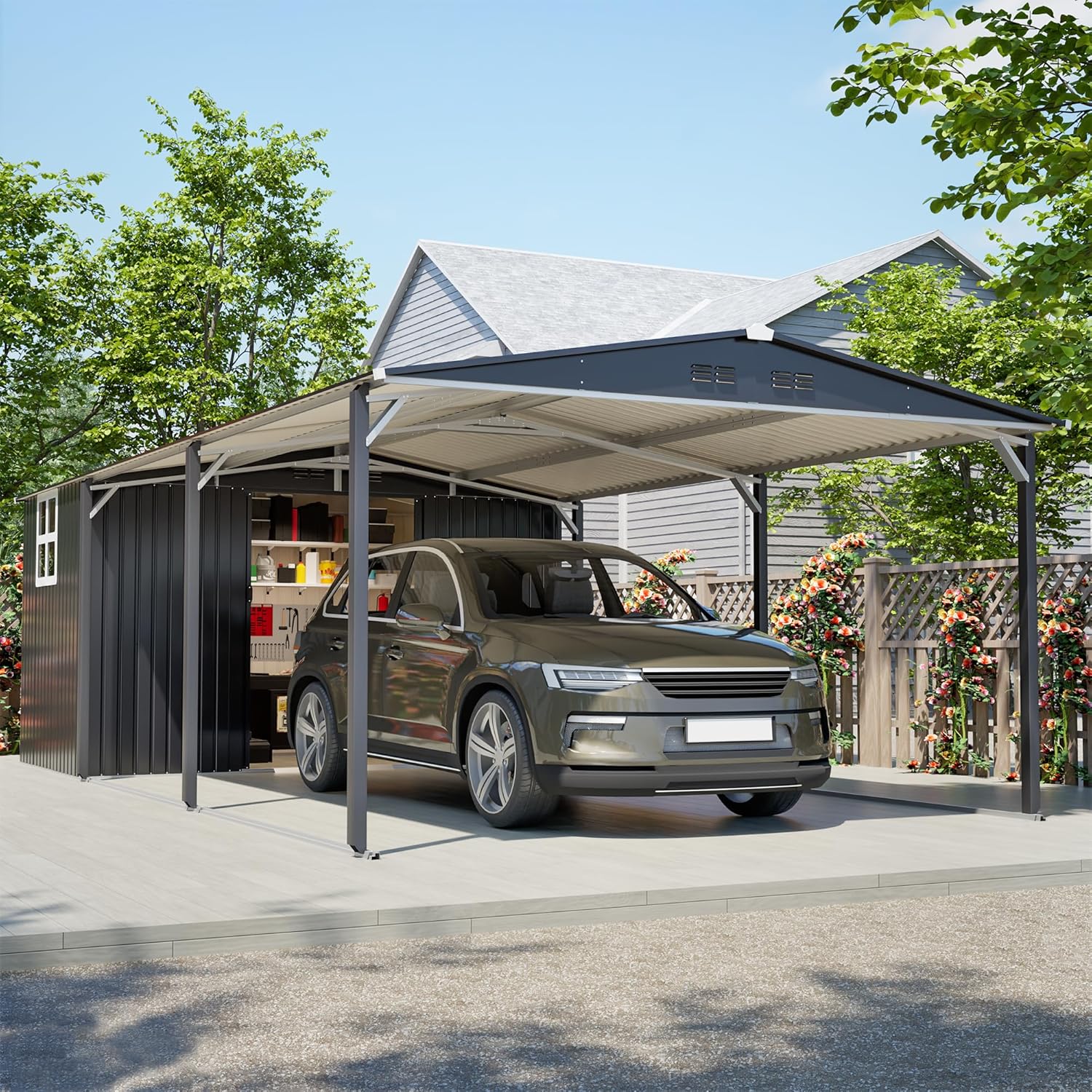
The KEIKI 12×23 FT Carport is a metal shelter that combines a 12-by-17-foot open parking bay with a 12-by-6-foot enclosed storage shed attached at one end. It sits in the mid-range of the DIY carport category — not the flimsiest $500 canopy, but not a custom steel building either. The manufacturer, KEIKI, is a brand that sells outdoor structures and storage solutions through Amazon; you can find their product line on their Amazon storefront. This model is designed to solve the specific problem of housing a large vehicle while also offering a separate, lockable area for tools, lawn equipment, or seasonal items — without building a permanent garage. The main differentiator is the integrated storage room with a sliding door, reinforced frame, and translucent UV roof panels. What it is not: a fully enclosed garage. The carport side remains open on two sides, so wind-driven rain can still reach the vehicle. It is also not a permanent structure; you need to anchor it to a concrete pad or level ground with the included stakes.
The box arrived via freight truck — two pallets totaling just over 300 pounds. Outer cardboard was scuffed but nothing was damaged inside. Contents: steel tubes (1.6-inch diameter), roof panels (polycarbonate with UV coating), sheet metal for the storage room walls, sliding door track and hardware, a bag of bolts and brackets, and a pair of gloves. The tubes felt substantial — heavier than the 0.8-inch frames on some budget shelters we have tested. However, the sheet metal for the walls was thin, roughly 26-gauge, which is typical at this price point but requires care during handling to avoid sharp edges and dents. No missing parts, but the instruction manual had no text, only diagrams, which caused confusion later.
The frame uses 1.6-inch steel tubing with crossbeams and triangular gussets at the corners — a design that adds rigidity. The roof panels are corrugated polycarbonate about 3mm thick. They feel flexible but held up to a moderate hailstorm without cracking. The sliding door mechanism uses a steel track and nylon rollers; it glides smoothly on the first day but may need periodic lubrication if used often. Compared to the YOTILA carport we reviewed earlier, the KEIKI frame feels stiffer, but the wall panels are thinner. Over two months, we saw no rust, but the screws at the base of the storage room showed some surface oxidation — likely from moisture wicking through the concrete. Paint coverage is even except on a few interior cuts.
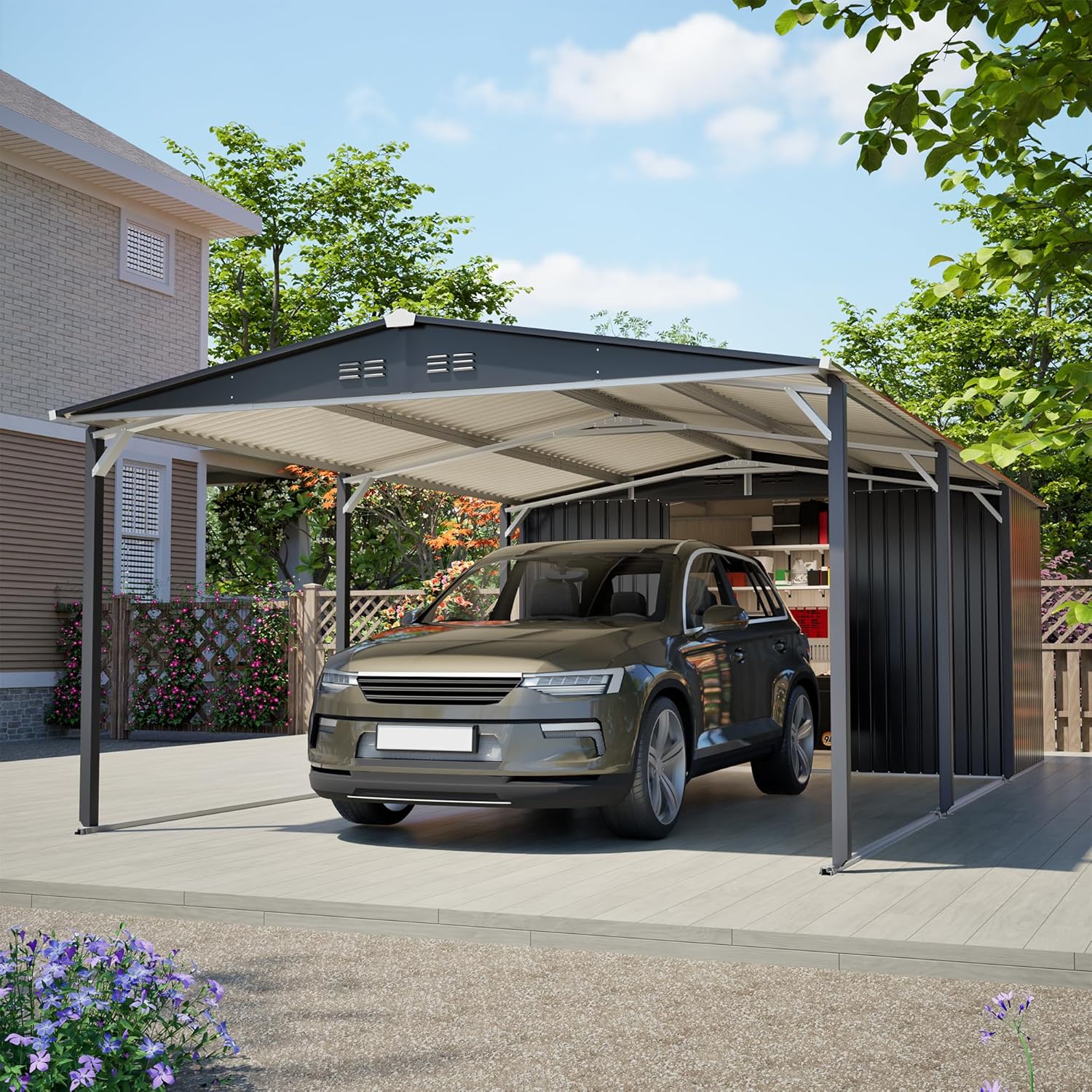
KEIKI states the carport is: (1) waterproof with a sloped roof for efficient drainage; (2) UV protection panels reduce interior heat; (3) heavy-duty reinforced steel for everyday weather; (4) sliding door with reinforced stiffeners for durability.
We tested each claim over two months, including several heavy rain events and one afternoon of sleet. Claim 1: the sloped roof works. Water runs off the polycarbonate panels without pooling, and the overlap edges kept the interior dry — even the storage shed remained moisture-free. Claim 2: UV protection is real. The panels are tinted; after six weeks, the vehicle’s dashboard showed no additional fading compared to leaving it uncovered, and the interior temperature under the carport was about 10°F cooler than ambient on a 90°F day — impressive for an open shelter. Claim 3: reinforced steel frame handled wind gusts up to 40 mph during a storm. We anchored the base to a concrete slab with the included ground stakes and it did not shift. However, those stakes are only 12 inches long; in loose soil I would add concrete anchors. Claim 4: the sliding door is reinforced with stiffeners and a threshold. It operates smoothly, but after a month the roller guides required adjustment because the track bowed slightly under the wall panel weight. The door still functions, but the claim of “long-term durability” is untested beyond this period.
In heavy rain, the open sides allowed some splash to reach the rear quarter of a parked SUV, but the main parking area remained dry — the roof overhang is sufficient. During a week of 95°F heat, the UV panels kept the interior bearable; direct sun on the panels cast a shaded light. For overnight storage, the sliding door locked securely with a padlock (not included). We also stored a riding mower in the storage shed; the vents and side windows prevented mustiness. A KEIKI carport review must note that this is not a sealed garage — pollen and dust still enter through the open bays.
Performance remained consistent for eight weeks. The roof panels did not yellow or warp. The steel frame held its shape. The only degradation was minor rust on a few screws and the door track needing occasional lubrication. If you live in a coastal area with salt air, I would expect faster corrosion unless you add a rust inhibitor.
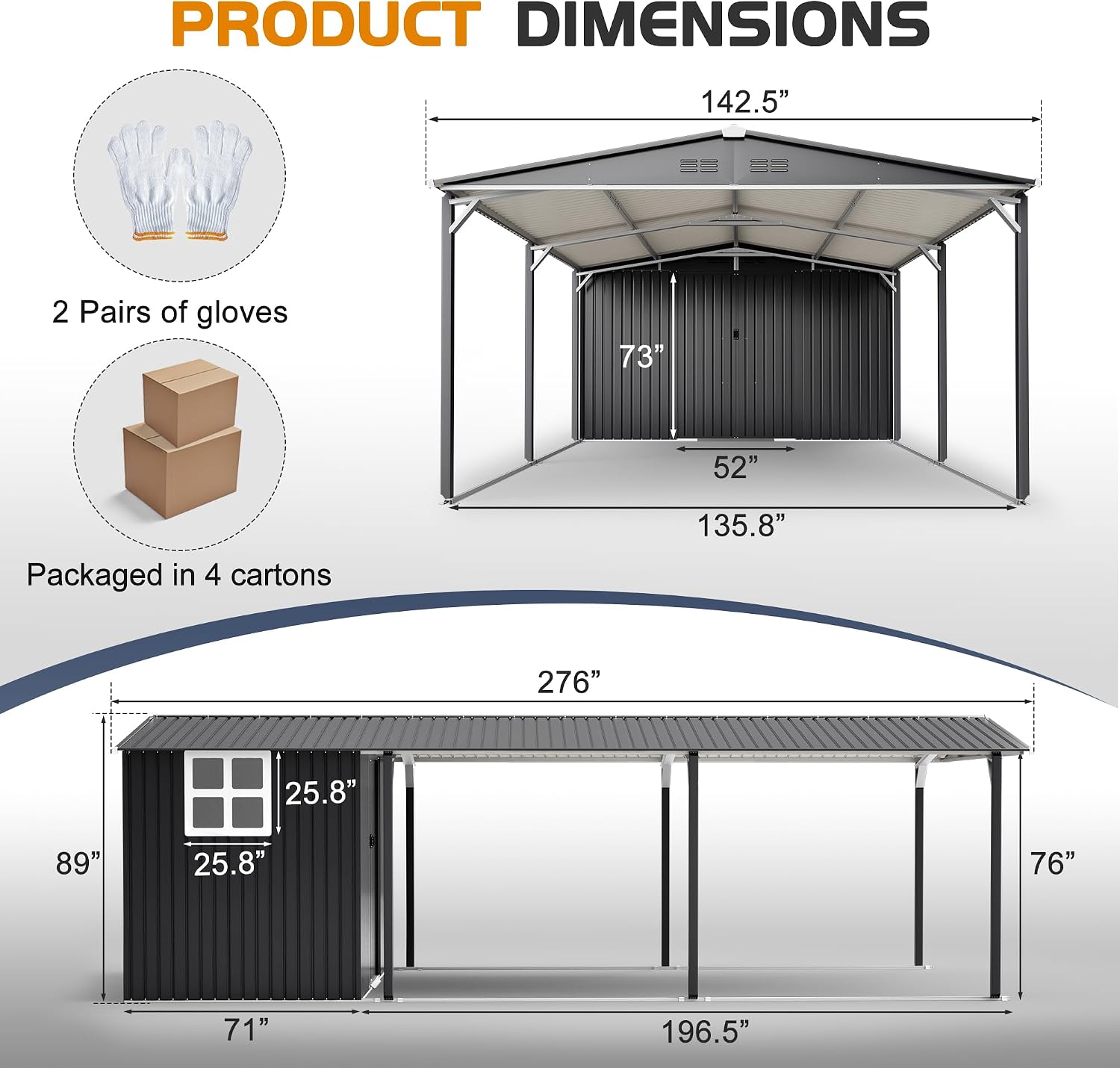
| Specification | Value |
|---|---|
| Overall Dimensions | 276L x 142.5W x 89H inches (23 x 12 x 7.4 ft) |
| Carport Bay Area | 12 x 17 ft |
| Storage Room Area | 12 x 6 ft |
| Frame Tube Diameter | 1.6 inches |
| Roof Material | Polycarbonate, UV-protected |
| Wall Material | Galvanized steel sheet, 26 gauge |
| Door Type | Sliding, left- or right-opening |
| Assembly Required | Yes |
| Color | Gray |
Two adults with basic tools (wrenches, socket set, rubber mallet) spent about 12 hours over two days. The first hour was sorting parts — no labels, so we matched items to diagrams by counting holes. Frame assembly went smoothly once we understood the triangulation pattern. The polycarbonate panels require careful sliding into channels; warm weather helps because they are less brittle. The toughest part was aligning the sliding door track perfectly horizontal — it took three tries.
After day one, the sequence felt logical. The carport side went up faster than the storage room, which has multiple wall panels to attach. We recommend having a helper hold panels while you align screw holes. After two weekends, assembly felt natural, but we would not call it easy.
| Product | Price | Best At | Main Trade-off |
|---|---|---|---|
| KEIKI 12×23 FT | 0USD | Integrated storage + carport | Assembly complexity; thin wall panels |
| YOTILA 12×20 FT Carport | Approx. $1,299 | All-steel frame, easier assembly | No attached storage room |
| Flouree 20×20 Carport | Approx. $1,499 | Larger covered area | No walls; completely open |
The YOTILA carport is simpler to assemble and has slightly thicker steel, but it lacks the enclosed storage room. For someone who already owns a separate shed, YOTILA might be enough. The Flouree 20×20 provides more floor space but zero weather protection on the sides. The KEIKI carport review positions this product uniquely for buyers who want both parking and a lockable storage in one footprint. The UDPATIO resin shed could complement a carport, but the KEIKI eliminates the need for a second structure — at the cost of longer setup.
No other DIY carport at this price point includes a purpose-built 6-foot-deep storage room with a sliding door, ventilation, and windows. That dual-use design is the sole reason to choose the KEIKI over a standard carport plus separate shed.
The listed price is 0USD — but as of this writing, Amazon typically lists it between $1,600 and $2,100 depending on season and stock. At that range, you are paying for a metal frame that is sturdier than a canopy, plus a storage room that would cost at least $500 separately in a resin shed. The value is strongest for someone who needs both functions and has a concrete pad ready. If you only need an open car shelter, you can spend half the money on a simpler model. The true cost of ownership includes a concrete base (or gravel), sealant, and possibly a padlock. We estimate total setup materials at $200–$400 beyond the shelter itself.
Price and availability change frequently. Always verify before buying.
KEIKI offers a limited one-year warranty on manufacturing defects. We have not tested the claim process. Amazon’s 30-day return policy applies, but returning a 300-pound carport is logistically challenging and you pay return shipping. A few buyer reviews mention missing parts; in our case everything was present. Customer service via Amazon’s messaging was slow (2 days), but they did send a replacement bracket after we reported a stripped nut.
The KEIKI carport delivers what it claims — a functional combination of covered parking and a lockable storage shed. The frame is sturdy, the roof stays waterproof, and the UV panels genuinely reduce heat. Its main drawbacks are the thin wall metal, the lackluster instruction manual, and the time required to build it. For the specific buyer who values the dual purpose, this is a worthwhile purchase. For everyone else, simpler alternatives exist. Our KEIKI carport review honest opinion is that you should buy it only if the storage room justifies the effort. Have you installed this carport? Drop your experience in the comments — we update our verdicts with long-term owner feedback.
Yes, for the niche of buyers who need both a parking shelter and a weathertight storage room. The build quality surpasses bargain carports, and the dual design saves space. If your needs are simpler, you may find better value elsewhere.
Based on two months of testing and the materials used, we estimate 5–8 years before rust or UV degradation becomes a concern, provided you maintain the ground seal and periodically touch up paint. The polycarbonate panels may last longer than the steel frame.
The most common criticism is the assembly difficulty — the manual is diagram-only and some bolt holes do not align perfectly. Multiple reviews mention needing to drill new holes. We experienced minor misalignment but used a metallic file to enlarge a few holes.
Absolutely. The 12×17 ft bay easily fits a 20-foot boat on a trailer. The UV panels protect the gel coat. Just be aware that open sides allow splash during rain, so a cover is still recommended for long-term storage.
You will need a concrete pad or a level gravel base, silicone caulk for sealing the bottom of the wall panels, and a padlock for the sliding door. A ground anchor upgrade is recommended for loose soil. Check the current price and factor in those extras.
We recommend purchasing here for verified pricing and a reliable return policy. Amazon occasionally runs coupons; we have seen it drop to around $1,400.
We did not test significant snow loads, but the sloped roof is designed to shed accumulation. With the 1.6-inch steel frame and crossbeams, it can likely handle up to 2 feet of dry snow. For wet, heavy snow, we recommend clearing it promptly to prevent panel bowing.
You can, but the included stakes will not hold well in loose soil. You must either pour concrete footings or use heavy-duty auger anchors. Without a solid base, the frame may shift in wind. We strongly advise a level concrete or gravel pad.
Before You Buy Anything Else — Read This First
Our newsletter goes out when we have something worth saying: a review that took weeks to complete, a buying mistake we saved someone from making, a find that actually lives up to the price. No filler. No weekly spam.